Protecting non-digital transactions is an important aspect of personal asset protection. In today's world where online banking and instant payment services are becoming more popular, paper cheques continue to be a fundamental method of effecting high-value transactions between businesses, settling between corporations, and clearing properties. Unfortunately, since these types of transactions are made through physical documents, there are specific vulnerabilities associated with them such as unauthorized changes made to the cheque as well as counterfeiting.
To address the vulnerabilities associated with paper cheques, the Reserve Bank of India (RBI) has implemented a Positive Payment System (PPS). The PPS provides additional verification of paper clearings by requiring a mandatory double-confirmation process on all financial instruments. When using PPS to clear a high-value cheque, the account holder will know that there will be no errors in processing the cheque.
This guide will provide a comprehensive overview of the PPS, including how it works, what types of verification take place, what the minimums and maximums are to clear cheques through some of the major commercial banks; and it will give you actionable steps on how to protect your banking transaction against financial fraud.
What is a Positive Pay System (PPS)?
The central monetary authority introduced the PPS infrastructure across commercial banks specifically to stop fraud involving cheque payments. Forgers often try to exploit traditional payment systems by tampering or altering cheques that have already been signed. Under this modern security framework, the person who writes the cheque must verify important cheque details through secure channels.
[Account Holder Submits Core Leaf Parameters]
│
▼
[Cheque Leaf Presented for Payment]
│
▼
[System Verifies Serial Number & Amount]
│
▼
[Verification]
│
┌────────────────┐
▼ ▼
[Matched] [Mismatch Found]
│ │
▼ ▼
[Payment Approved] [Transaction Blocked]
│
▼
[Alert Generated]
These recorded details are securely stored in a central repository until the physical paper is presented at a bank counter. If the parameters you provided perfectly match the physical document during scanning, the payment goes through smoothly. However, if the system detects any differences between the two records, the cheque is sent back immediately without being cleared. This security tool helps protect your capital from unauthorized changes.
Is Positive Pay Mandatory?
A common point of confusion among bank account holders is whether this verification process is required for every single transaction. Here's what most people get wrong: they assume the rule applies uniformly across all monetary values or that every bank handles it identically. At a broad regulatory level, utilizing a positive pay system is not mandatory for every cheque you issue.
However, complete discretion is granted to individual retail banks to enforce stricter safety rules for high-value clearances. Major banking entities like the Bank of Baroda, HDFC Bank, Punjab National Bank, and ICICI Bank have updated their guidelines to make this verification compulsory for cheques of Rs. 50,000 and above. If you do not provide your digital confirmation before these high-value cheques hit the clearing house, your payment could face unexpected rejections.
Positive Pay System Limit
The operational boundaries of this double-verification network are determined by the specific transaction amount. A positive pay system has a limit of Rs. 50,000 and more. This means the advanced validation system is reserved for transactions that meet or exceed this specific financial line.
If a cheque is written for a lower amount, it will not be covered by this pay system. For smaller daily expenses, your bank will clear the document using traditional verification methods, like signature matching and visual security checks. This financial limit ensures that banks can protect large, high-risk transactions while keeping low-value personal payments moving quickly without extra paperwork.
Positive Pay Details
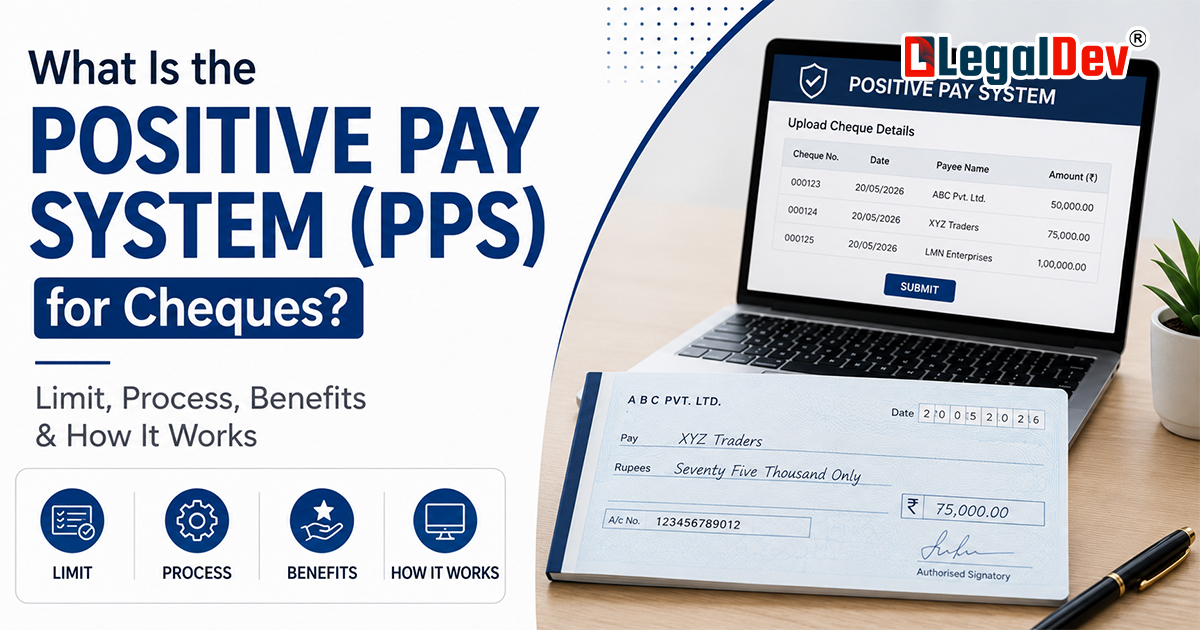
To protect your transactions from forgery, you must provide your bank with key structural data from the cheque leaf. When using the Positive Pay System, a cheque issuer needs to submit the following details to ensure accurate verification:
-
Cheque Number: The unique six-digit serial number printed at the bottom of the leaf.
-
Customer Account Number: Your primary bank account identifier from which the funds will be deducted.
-
Cheque Date: The exact day, month, and year written on the top-right corner of the document.
-
Name of the Beneficiary or Payee: The precise legal identity of the individual or company receiving the funds.
-
Cheque Amount: The total numeric value allocated for the transaction.
How Does a Positive Pay System Work?
The verification system relies on a simple data-matching process between the account owner and the bank. A positive pay system operates by requiring an issuer of a cheque to provide specific details such as the customer’s account number, cheque number, date, amount, and beneficiary name.
[SUBMISSION CHANNELS]
└── Registered Email Notification
└── In-Person Branch Ledger Submission
└── Secure Corporate Internet Banking
└── Mobile Banking Application Portals
Account holders can easily share this transaction data through multiple convenient channels based on their preferences. You can submit these details via registered email, branch visit, or internet or mobile banking. Usually, these details are submitted a day before the cheque is presented by the payee for smooth payment processing. Upon receiving the details, the bank verifies them with the presented cheque instrument before processing the payment.
Conclusion
Positive Pay is a critical measure to prevent contemporary financial fraud and offer security on higher-value transactions. Banks can halt fraudulent activity when funds are not being transferred from your account, by cross-checking basic parameters, including serial number, cheque number, and amount. While verification for items below Rs. 50,000 is entirely optional; as of 2010, most major banks require verification for items over Rs. 50,000 in an attempt to create an environment of increased safety for their customers. Uploading your cheque parameters online takes a moment to complete and allows for the successful movement of your legitimate cheques through the clearing house without delay. If you'd like assistance with improving your company's financial security or if you would like assistance with creating secure corporate banking workflows, contact Legaldev today for a review of your current financial safety plan.
Frequently Asked Questions
Q1: What happens if I forget to submit my Positive Pay System details for a high-value transaction? If a cheque value exceeds the mandatory limits set by your bank and you skip the confirmation step, the clearing house may halt the payment. The bank will flag the transaction for verification and might reject the document to protect your account from fraud.
Q2: Can I use the Positive Pay System for a cheque worth Rs. 20,000? No, you cannot use it for that amount. The system has a fixed entry limit of Rs. 50,000 and above. Any leaf written for a lower amount is processed through standard verification methods instead.
Q3: Which specific details must a cheque issuer provide to the bank under this scheme? To complete the verification, you must provide the cheque number, your customer account number, the date, the exact payee name, and the final amount. This data allows the system to run an accurate match.
Q4: How far in advance should I submit my transactional data to the bank? To ensure smooth payment processing, you should submit your verification data at least one day before the payee presents the physical document. This timing gives the system enough time to index your details.
Q5: What electronic channels can I use to upload my validation data without visiting a branch? You do not need to visit a physical branch to secure your payments. Account holders can submit their data through internet banking portals, official mobile banking applications, or their registered email.