E-Way Bill Limit: When Is It Mandatory Under GST?
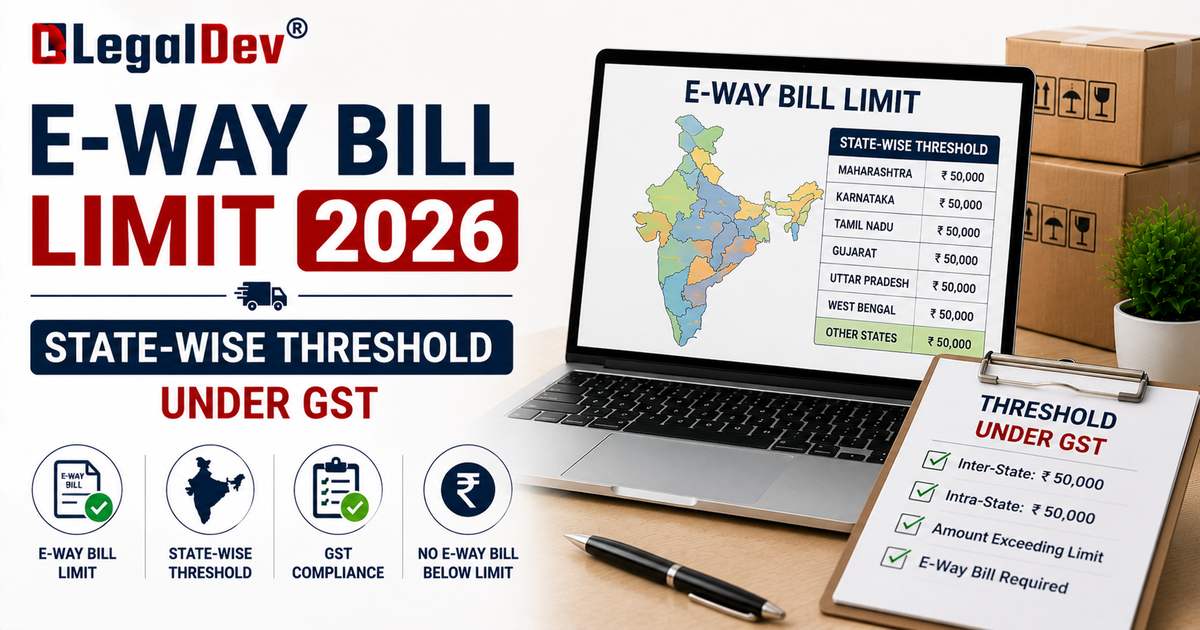
The e-way bill limit is the minimum consignment value above which generating an e-way bill becomes compulsory. For most of India, that number is ₹50,000. But intra-state movement is where the limit actually varies, sometimes significantly, depending on which state you're shipping within.
The Standard E-Way Bill Limit
For inter-state movement of goods, the threshold is a flat ₹50,000 across the entire country. This figure hasn't changed in years and applies uniformly, regardless of which two states are involved.
For intra-state movement, the central rule sets ₹50,000 as the default, but individual states have the power to raise this limit for movement within their own borders. Many have done exactly that.
How Consignment Value Is Calculated
The ₹50,000 figure is based on the taxable value shown on the invoice, bill of supply, or delivery challan, including the applicable GST amount. If you're moving multiple items under one invoice, add up the total invoice value, not the value of individual line items.
State-Wise E-Way Bill Limit Table
|
State / UT
|
Intra-State Limit
|
|
Karnataka, Andhra Pradesh, Kerala (general goods)
|
₹50,000
|
|
Maharashtra
|
₹1,00,000
|
|
Delhi
|
₹1,00,000
|
|
Bihar
|
₹1,00,000
|
|
Punjab
|
₹1,00,000
|
|
Tamil Nadu
|
₹1,00,000
|
|
Jharkhand
|
₹1,00,000
|
|
Madhya Pradesh
|
₹1,00,000
|
|
West Bengal
|
₹1,00,000
|
|
Rajasthan (within the same city, specified goods)
|
₹2,00,000
|
|
Kerala (gold, precious stones, branch transfers)
|
₹10,00,000
|
|
Jammu & Kashmir
|
Exempt from intra-state e-way bill entirely
|
These figures reflect the general pattern reported by state GST departments as of 2026. States revise their notifications from time to time, and some carve out exceptions for specific goods, such as tobacco, pan masala, or iron and steel, that don't get the higher limit. Always confirm the current notification for your state before assuming a shipment falls under the higher threshold.
Special Cases in the Limit Rules
-
Rajasthan's ₹2 lakh intra-city limit doesn't apply to tobacco products, pan masala, wood and wood articles, or iron and steel; the standard ₹1,00,000 limit applies to those goods instead.
-
Kerala's ₹10 lakh threshold applies specifically to gold, silver, and precious stones transferred between branches of a registered jeweller within the state. Part B of the e-way bill isn't required for this specific movement.
-
Jammu & Kashmir has exempted intra-state movement from the e-way bill requirement altogether, regardless of consignment value.
What Counts Toward the Limit
-
Sale of taxable goods.
-
Stock transfers between branches with different GSTINs.
-
Job work movements above the threshold.
-
Sales returns above the threshold.
What Doesn't Count Toward the Limit
-
Goods on the Rule 138(14) exemption list, regardless of value.
-
Non-taxable goods like alcoholic liquor for human consumption.
-
Movement handled entirely under customs supervision.
Multiple Consignments in One Vehicle
If a transporter carries several separate consignments in one vehicle, and each individual consignment is below ₹50,000, the transporter doesn't need to treat the combined load as a single shipment requiring one large e-way bill. Instead, each consignment above the threshold gets its own e-way bill, and the transporter can generate a Consolidated E-Way Bill (Form EWB-02) that groups all the individual e-way bill numbers for that vehicle.
Example: How the Limit Plays Out
A Kerala-based jeweller moves gold jewellery worth ₹12 lakh between two of the firm's own branches within the state. Since this movement falls under Kerala's ₹10 lakh gold threshold, and the value exceeds it, an e-way bill is required, even though the transfer is intra-state and involves no sale.
Compare this to a Karnataka retailer moving general merchandise worth ₹45,000 within Bengaluru. Since this is below the ₹50,000 threshold that Karnataka follows, no e-way bill is needed for this specific shipment.
Frequently Asked Questions
1. Is the ₹50,000 limit before or after GST?
It's based on the total invoice value, which includes the GST component.
2. Can I generate an e-way bill voluntarily for a lower-value shipment?
Yes. Businesses often do this for their own record-keeping, even when the value is below the threshold.
3. Does the limit apply per invoice or per vehicle?
It applies per consignment, meaning per invoice or delivery challan, not the total value of everything in the vehicle. Multiple low-value consignments in one vehicle can be tracked using a Consolidated E-Way Bill.
4. Has the ₹50,000 limit changed recently?
No. The core ₹50,000 threshold has remained stable; the 2026 changes affect Ship-To GSTIN declarations and closure procedures, not the value threshold itself.
5. What is the Eway bill limit?
₹50,000 per consignment is the standard trigger, and it applies uniformly across India for inter-state movement. For intra-state movement, several states have raised their own limit to ₹1,00,000 or higher, so the exact figure depends on where the goods are moving within.
6. Is Eway required for an invoice exceeding Rs 50000 if both the seller and the buyer are not registered under GST in India?
Yes. The e-way bill requirement is based on the value of goods moved, not on whether either party is GST-registered. Unregistered persons can enrol on the portal as citizens and generate the bill themselves for such transactions.
7. Is an eWay bill required for less than 50 km?
It depends on the state. Several states waive the requirement to fill Part B, the vehicle details, when the distance between the consignor and the transporter is under 50 km within the same state, though Part A generation may still apply if the value crosses the threshold.
8. What is the turnover limit for an e-way bill?
There isn't one. E-way bills are triggered by the value of an individual consignment, not by your business's overall annual turnover. A business with modest yearly revenue still needs one the moment a single shipment crosses ₹50,000.
Read Next
Once you know whether your shipment crosses the threshold, confirm the exact applicability conditions on our When Is an E-Way Bill Required? page, then move to How to Generate an E-Way Bill to create one.