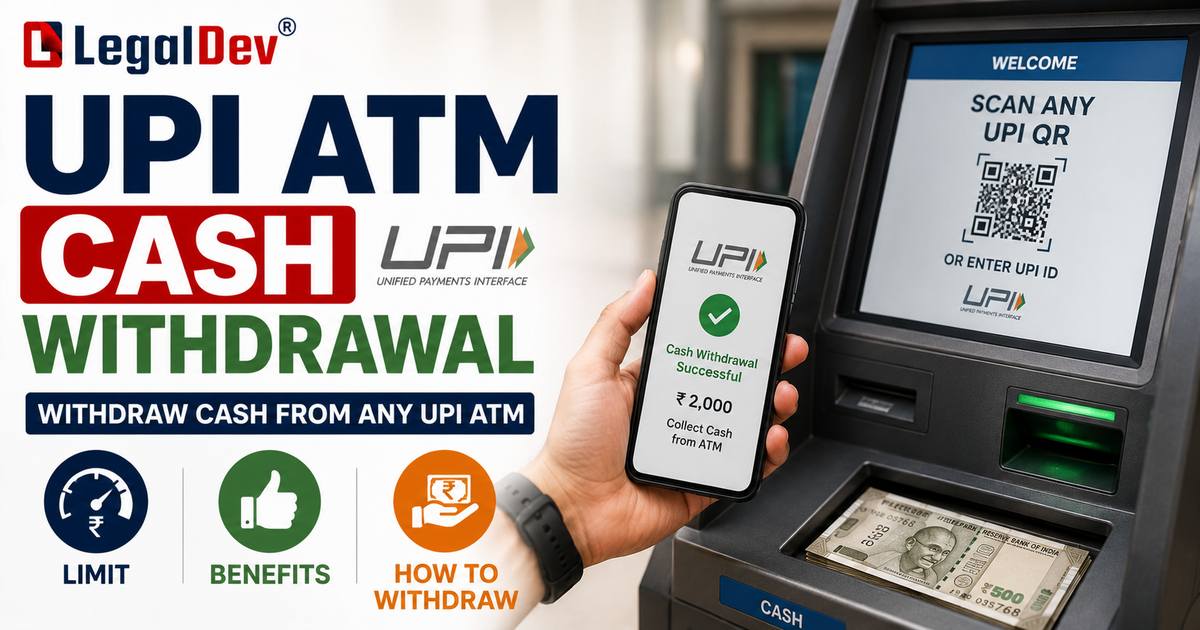
UPI ATM Cash Withdrawal: No Card Needed
Forgot your debit card at home? There's a way to still pull out cash from an ATM — and no, it's not magic. It's UPI ATM cash withdrawal, and if you haven't tried it yet, you're going to want to.
Using any UPI app — PhonePe, Google Pay, Paytm, BHIM — you can scan a QR code at a supported ATM and withdraw money without touching a card. The whole thing takes about a minute.
What Is UPI ATM Cash Withdrawal?
It's a cardless cash withdrawal system built on something called Interoperable Cardless Cash Withdrawal (ICCW). Rolled out in 2023, the system lets you walk up to a UPI-enabled ATM, scan a dynamic QR code the machine generates, enter your UPI PIN, and collect your cash.
No card. No card reader. No risk of card skimming.
The "interoperable" part matters — it works across banks and UPI apps, not just one specific combination. So whether you're a PhonePe user or a BHIM user, the process is the same.
How to Withdraw Cash from a UPI ATM — Step by Step
The steps are straightforward. Here's what you actually do:
-
Walk up to a UPI-enabled ATM
-
Select UPI Cash Withdrawal on the ATM screen
-
Enter the amount you want to withdraw
-
The ATM generates a single-use dynamic QR code — scan it with your UPI app
-
Enter your UPI PIN to authorize the transaction
-
For higher-value withdrawals, your app may also ask for fingerprint or face verification
-
Collect your cash once the transaction is confirmed
The QR code is generated fresh each time and expires quickly, which is part of why this method is harder to fake than a physical card.
UPI ATM Cash Withdrawal Limit
The per-transaction limit for cardless UPI ATM withdrawal is ₹10,000. This amount counts toward your overall UPI daily limit of ₹1 lakh, and also falls within whatever per-day ATM withdrawal limit your specific bank has set.
Different banks have different daily caps, so it's worth checking with yours if you plan on making multiple withdrawals in a day.
Key Features Worth Knowing
Flexibility Across Accounts
One thing that makes this genuinely more useful than a regular debit card: you can pick which bank account to withdraw from at the time of the transaction. Most people link two or three accounts to their UPI app — this lets you use whichever one you need, right then.
QR Code-Based Process
The QR code is generated by the ATM and changes every session. There's no static code to copy or photograph, which removes one of the classic fraud angles.
Instant Dispensation
Once your UPI PIN is verified, the cash comes out immediately. No waiting, no delayed confirmation.
Transaction Limit Per Use
Each cardless ATM withdrawal using UPI is capped at ₹10,000. There's no smaller minimum — you can withdraw less if that's what you need.
Why This Is Actually Useful
No Card, No Problem
The most obvious benefit: you don't need your physical debit card. If you've just opened a new account and your card hasn't arrived yet, this works. If your card is at home, this works. If your card is blocked, this works — as long as your UPI account is active.
Harder to Defraud Than a Card
Card cloning, skimming devices on ATMs, stolen cards — none of these risks apply here. The transaction authenticates through your phone and your UPI PIN. Even if someone somehow grabbed your phone, they'd still need the PIN (and possibly your fingerprint) to complete the withdrawal.
Multiple Account Access
With a regular ATM card, you're using one account. With UPI, you can choose from any linked account. That's genuinely more flexible, especially if you're managing separate savings and spending accounts.
Available at Most Banks
This isn't a feature limited to one or two banks. Over 30 banks across India now support UPI ATM cash withdrawal, including public sector banks, private banks, and small finance banks.
Banks That Support UPI ATM Cash Withdrawal
A wide range of banks currently offer this facility. Some of the major ones:
Public Sector Banks: State Bank of India, Punjab National Bank, Bank of Baroda, Bank of India, Union Bank of India, Indian Bank, Canara Bank, UCO Bank, Central Bank of India, Punjab and Sind Bank
Private and Small Finance Banks: Yes Bank, IndusInd Bank, Federal Bank, Karur Vysya Bank, City Union Bank, Ujjivan Small Finance Bank, Equitas Small Finance Bank, Suryoday Small Finance Bank, Fincare Small Finance Bank, Utkarsh Small Finance Bank
Cooperative and Regional Banks: Cosmos Bank, GP Parsik Sahakari Bank Ltd, Janata Sahakari Bank, The Mehsana Urban Co-op Bank
Gramin and Rural Banks: Andhra Pragathi Grameena Bank, Andhra Pradesh Grameena Vikas Bank, Chhattisgarh Gramin Bank, Telangana Grameena Bank, Uttarakhand Gramin Bank, Saurashtra Gramin Bank, Karnataka Vikas Grameena Bank, Meghalaya Rural Bank, Arunachal Pradesh Rural Bank, Rajasthan Marudhara Gramin Bank
Others: HSBC
For the most current list, NPCI's official website is the reliable source.
Charges and the Free Transaction Limit
NPCI does not charge anything extra for UPI ATM withdrawals. But — and this is worth paying attention to — the transaction does count toward your monthly free ATM transaction limit.
Starting June 2026, cardless UPI ATM withdrawals are officially counted in your bank's free monthly ATM transaction quota. Once you've used up your free transactions for the month, your bank's standard ATM charges will apply to any additional withdrawals, whether card-based or UPI-based.
How many free transactions you get per month depends on your bank and account type. Check with your bank directly if you're not sure where you stand.
UPI Apps That Work for This
The most widely used ones — PhonePe, Google Pay, Paytm, and BHIM — all support UPI ATM cash withdrawal. Any UPI app that's enabled for cardless ATM transactions will work, as long as the ATM and your bank both support ICCW.
A Quick Recap
UPI ATM cash withdrawal is a practical, secure alternative to card-based ATM withdrawals. The ₹10,000 per-transaction limit keeps individual withdrawals small, but the security advantages — no card skimming risk, biometric authentication option, flexible account selection — make it a genuinely useful feature for everyday use.
If you haven't set it up, just make sure your UPI app is updated and your bank account is linked. Next time you're at a supported ATM and your card isn't on you, you'll be glad you know this exists.
FAQs
Q: What is the UPI ATM cash withdrawal limit per transaction?
A: The limit is ₹10,000 per transaction. This amount is part of your overall UPI daily limit of ₹1 lakh, and also subject to your specific bank's daily ATM withdrawal cap. Different banks may have different daily limits, so checking with your bank is a good idea if you plan multiple withdrawals.
Q: Which UPI apps can I use for cardless ATM withdrawal?
A: PhonePe, Google Pay, Paytm, and BHIM all support UPI ATM cash withdrawal. Any UPI-enabled app that supports the ICCW framework will work, as long as your bank and the ATM both support the service.
Q: Are there any charges for UPI ATM cash withdrawal?
A: NPCI itself doesn't charge separately for this. However, from June 2026, UPI ATM withdrawals count toward your monthly free ATM transaction limit. Once that limit is exhausted, your bank's standard ATM withdrawal charges apply.
Q: When did UPI ATM cash withdrawal start in India?
A: The first UPI-enabled cardless ATM was launched in September 2023. It was built by Hitachi Payment Services in collaboration with NPCI and marked the beginning of the ICCW rollout across Indian banks.
Q: Can I use UPI ATM withdrawal if I don't have my debit card?
A: Yes, that's one of the main use cases. You only need your UPI app and your UPI PIN. This is also useful if your debit card hasn't been issued yet after opening a new bank account.
Q: Is UPI ATM cash withdrawal safe?
A: It's considered more secure than card-based withdrawals because there's no physical card to clone or skim. Authentication happens through your UPI PIN, and for higher-value withdrawals, some apps also require fingerprint or face verification.
Q: Does SBI support UPI ATM cash withdrawal?
A: Yes, State Bank of India supports UPI ATM cash withdrawal at its ATMs. You'll need a UPI app that supports cardless ATM transactions and a bank account linked to that app.
Q: How many banks offer UPI ATM cash withdrawal in India?
A: Over 30 banks currently support this feature, including public sector banks, private banks, small finance banks, and rural cooperative banks. NPCI maintains an updated list on its website.
Q: What happens if the QR code expires before I scan it?
A: The QR code generated at the ATM is single-use and time-limited. If it expires, you'll need to restart the transaction on the ATM screen to generate a new one. It's a security feature, not a bug.
Q: Can I withdraw cash from multiple accounts using UPI at an ATM?
A: In a single transaction, you withdraw from one account. But because UPI allows you to link multiple bank accounts, you can choose which account to use each time you initiate a withdrawal — unlike a debit card, which is tied to one account only.