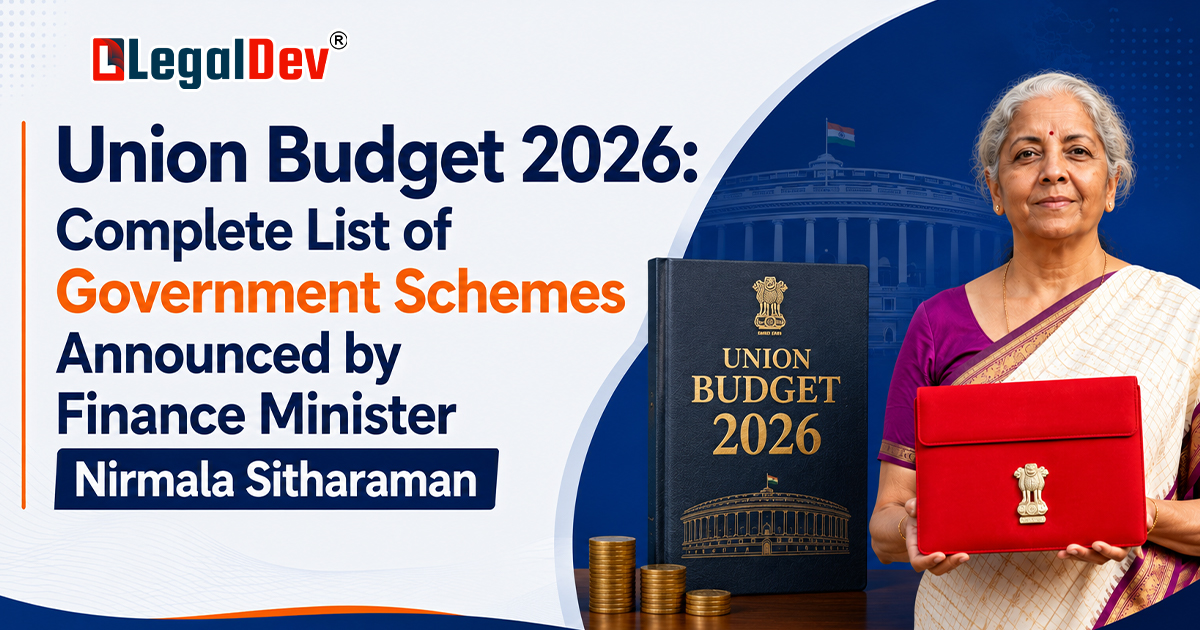
 The Union Budget for the fiscal year 2026–27 contains a large number of social security programs and initiatives that could lead to transforming the economic landscape of India. These have been presented by Finance Minister Nirmala Sitharaman, as part of a plan for strategic investment into improving rural jobs and supporting growth of sustainable modern infrastructure. The Union Budget provides major changes for all Indian citizens, businesses and rural/small holder farms in working conditions, career opportunities and financial security. This guide examines every single programme of the Government that was included in the Union Budget for 2026 and provides information on how these programmes will affect you, your family and your community.
Core Priorities Driving the Budget 2026 Welfare Policy
The economic blueprint presented by Finance Minister Smt. Nirmala Sitharaman prioritizes balanced, widespread growth. The government is intentionally moving away from concentrated urban development, choosing instead to steer public funds into the communities and industries that form the backbone of the economy. This national growth strategy relies on five foundational pillars to ensure long-term stability.
FIVE FOUNDATIONAL PILLARS
│
└── Productivity & Industrial Growth
└── Workforce Skilling
└── Agrarian Modernization
└──Regional Transitions
└── Economic Sustainability
1. Productivity and Industrial Growth
The state aims to boost local manufacturing capabilities by easing operational bottlenecks for MSMEs (Micro, Small, and Medium Enterprises). This pillar focuses on cutting down red tape and modernizing supply logistics to help small businesses move products across states more efficiently.
2. Job Generation and Workforce Skilling
Building a job-ready population requires moving past traditional classroom setups. This framework funds practical skill development infrastructure inside schools, colleges, and localized service sectors to prepare the youth for modern corporate hiring needs.
3. Agrarian Modernization
The rural economy requires structured protection against shifting climate patterns. By providing farming communities with real-time, actionable data, the budget aims to modernize traditional farming while increasing investments in high-value secondary crops, animal husbandry, and local aquaculture.
4. Regional Integration
Economic expansion must reach beyond traditional corporate zones to be truly effective. The administration is injecting direct capital into Tier-2 and Tier-3 cities, historic temple destinations, and underserved communities in Eastern and North-Eastern India to balance regional wealth.
5. Eco-Friendly Transitions
Long-term economic safety requires reducing reliance on conventional power grids. This pillar commits long-term capital to clean logistics, helping heavy industries lower their carbon footprints while building domestic processing lines for green energy materials.
Complete Breakdown of Sector-Wise Government Schemes
1. Agriculture and Rural Livelihoods
The agrarian sector remains India's largest source of employment. The current budget focuses on insulating farmers from unpredictable weather patterns while increasing overall household earnings.
Bharat-VISTAAR Platform
This multi-lingual, artificial intelligence-powered system acts as a digital advisory lifeline for rural farmers. By translating complex weather information, soil analysis reports, and market demand fluctuations into local regional languages, the program helps farmers make smart, timely crop management choices.
Reservoir Development Scheme
Water security is a major challenge for rural communities. Under this initiative, the government is funding the integrated upgrade and cleaning of 500 major reservoirs and local Amrit Sarovar’s, providing consistent irrigation options for nearby farms and opening up secure opportunities for inland fish farming.
High-Value Agriculture and Coconut Promotion Schemes
To help farmers move away from low-yielding traditional crops, the government is introducing direct financial support to scale up the cultivation of cash crops. This includes targeted funding for growing:
-
Coconuts (via a dedicated development program)
-
Cashews and Cocoa
-
Sandalwood
-
Premium nuts like Almonds, Walnuts, and Pine Nuts
Animal Husbandry Entrepreneurship Support
Livestock management serves as an important secondary income source for millions of families. This program introduces credit-linked financial subsidies that make it much easier for rural residents to build modern dairy barns, acquire healthier livestock varieties, and set up local veterinary centers.
2. Healthcare and Wellness Enhancements
Public healthcare investments in this budget focus on addressing systemic shortages of medical personnel, building better emergency services, and improving the quality of specialized medical centers.
Allied Health Professionals (AHP) Expansion
To support doctors and reduce hospital overcrowding, the government is funding an institutional upgrade program designed to train and certify 100,000 Allied Health Professionals over the next five years. These certified workers will handle essential roles in medical imaging, laboratory work, and post-surgery rehabilitation.
Caregiver Training Scheme
With a growing elderly population and rising medical needs, this program plans to equip 150,000 workers with combined medical and supportive care skill sets. These certified caregivers will assist families in managing chronic illnesses, physical disabilities, and specialized eldercare right at home.
Regional Medical Value Tourism Hubs
India is a premier international destination for affordable, high-quality medical treatments. The government, in active partnership with private healthcare networks, will establish five dedicated medical tourism hubs designed to streamline international patient care, create local healthcare jobs, and bring in valuable foreign exchange.
Mental Health and Trauma Care Expansion
Addressing long-overlooked areas of healthcare, this initiative funds the creation of NIMHANS-2, a premier psychiatric facility, alongside sweeping upgrades to existing institutes in Ranchi and Tezpur. Furthermore, emergency trauma centers at the district hospital level are receiving direct grants to ensure rapid, lifesaving care during traffic or industrial accidents.
3. Education, Skill Development, and Creative Learning
The youth development strategy moves past traditional textbook learning, focusing on setting up modern training facilities near employment zones while actively encouraging creative industries.
Industrial University Townships
The government is building five brand-new university townships placed strategically alongside major industrial and logistics transit corridors. This ensures students study within walking distance of massive manufacturing plants, simplifying internships, corporate training, and immediate post-graduation hiring.
Girls' STEM Hostels
To bridge the gender gap in science and technology fields, this program guarantees the construction of a dedicated girls' hostel in every single district across India. These hostels will provide safe, affordable housing options for young women pursuing higher education in science, technology, engineering, and mathematics.
AVGC Content Creator Labs
Recognizing the rapid growth of the digital creator economy, this creative initiative will build modern Animation, Visual Effects, Gaming, and Comic (AVGC) labs inside 15,000 schools and 500 colleges. These spaces give young, creative students access to high-end digital design tools and professional audio-video recording gear early in life.
National Institute of Design (East)
To promote high-end creative education outside traditional major cities, the government is establishing a new National Institute of Design campus in Eastern India. This institution will focus on turning regional artistic talent into valuable global design careers.
Education-to-Employment Standing Committee
To solve the persistent issue of college graduates struggling to find relevant jobs, this high-powered standing committee will bring together university leaders, industry heads, and business founders. Their main job is to keep college courses updated to match actual hiring requirements in the private sector.
4. Infrastructure, Trade, and Regional Connectivity
Massive public investments in transportation networks form the core of the current economic growth strategy, making travel faster and reducing business shipping costs.
Public Capital Expenditure Boost
The central government has increased public capital expenditure allocations to an unprecedented ₹12.2 lakh crore for the 2026–27 fiscal year. This massive injection of capital will fund the construction of new highways, bridges, and regional transport hubs across the country.
Infrastructure Risk Guarantee Fund
To encourage private sector companies to build massive public utilities, this special fund will provide financial guarantees to project developers. This protection helps lower project risks, prevents multi-year delays, and ensures major construction projects finish on time.
National Waterways Expansion and Ship Repair Ecosystems
The government plans to bring 20 new national waterways into full operation over the next five years, offering a cheaper and cleaner alternative to road freight. To support this expanding water network, dedicated, modern ship repair hubs will be built along major river routes in Varanasi and Patna.
Coastal Cargo Promotion Scheme
Shipping goods via coastal waters and inland rivers is often much cheaper than moving cargo across jammed highways. This program offers financial incentives and lower port fees to shipping companies that choose water transport over traditional overland trucking.
City Economic Regions Scheme
To transform Tier-2 cities, Tier-3 towns, and historic temple destinations into thriving trade hubs, the government is providing ₹5,000 crore in development grants per selected region. These funds will be used to modernize local drainage networks, fix city traffic flow, and build organized public markets.
High-Speed Rail Corridors
The national rail network is expanding beyond standard passenger trains by developing seven new high-speed rail corridors. These advanced lines will connect major trading hubs, making it easier for professionals to travel between cities and accelerating commercial growth along the transit routes.
Seaplane Viability Gap Funding (VGF)
To open up tourism in remote geographic regions lacking flat land for traditional runways, the government is providing Viability Gap Funding to support commercial seaplane operations. This funding will build affordable water docks near remote lakes, islands, and river deltas.
5. Social Welfare, Inclusion, and Specialized Assistance
A core part of the current budget focuses on expanding economic opportunities for women entrepreneurs and giving citizens with physical disabilities better access to jobs and resources.
SHE-Marts Initiative
To help rural women entrepreneurs expand their businesses beyond local village markets, the government is funding the creation of community-owned retail storefronts called SHE-Marts. These physical and digital outlets allow women-led self-help groups to sell handcrafted items, organic foods, and textiles directly to urban buyers without middleman fees.
Divyang Kaushal Yojana
This specialized training program focuses on creating economic independence for individuals with physical disabilities (Divyangjan). The program funds free, fully accessible training courses in high-paying sectors, including:
-
Information Technology (IT) and Software Testing
-
Digital Content Creation and AVGC Editing
-
Professional Hospitality Management
-
Customer Service Operations
Divyang Sahara Yojana
To make daily life more accessible, this program pours resources into the Artificial Limbs Manufacturing Corporation of India (ALIMCO) and specialized technology research centers. The goal is to lower production costs and distribute high-quality assistive devices, advanced prosthetics, and smart mobility aids to families in need.
6. Tourism, Cultural Heritage, and Eco-Trails
Travel and hospitality are vital engines for local employment, and the new budget outlines specific plans to preserve historic spaces while training local hospitality workers.
Tourist Guide Upskilling Pilot Scheme
To provide international visitors with a world-class travel experience, the government is running a pilot program to retrain and certify 10,000 local tourist guides. The training will take place across 20 iconic heritage locations, focusing on language skills, historical accuracy, and tourist safety.
National Destination Digital Knowledge Grid
This massive cultural preservation project aims to create highly accurate digital maps and multi-media documentation for every major spiritual, historical, and cultural landmark in India. This library will preserve local histories and serve as an authentic database for global travelers planning trips.
Eco-Tourism Trail Development
To promote eco-friendly travel that respects local wildlife, the government is funding the development of organized, low-impact nature trails. These include safe mountain trekking pathways, protected turtle nesting observation sites, and specialized bird-watching spots managed in partnership with local forest communities.
Archaeological Site Development
Fifteen important archaeological excavations across the country will receive major funding to transform them into world-class, experiential public parks. These upgrades will add clean public walkways, interactive educational museums, and multilingual signs to explain local history clearly.
International Big Cat Alliance Summit
Showcasing India's leadership in wildlife conservation, the government is funding the upcoming International Big Cat Alliance Summit. This event will bring together conservation experts and government leaders from 95 range nations to build joint protection strategies for endangered wild cats.
7. Sustainability, Environmental Protection, and Green Growth
Long-term economic safety requires moving toward cleaner manufacturing and energy habits. The budget includes concrete financial allocations to help transition heavy industries toward lower pollution targets.
Carbon Capture Utilization and Storage (CCUS) Funding
The government is allocating ₹20,000 crore over the next five years to help high-pollution heavy industries—like steel, cement, and chemical manufacturing—install modern carbon capture equipment. This technology captures harmful emissions directly from factory chimneys before they enter the atmosphere, storing them safely or reusing them in industrial products.
Clean Energy and Critical Mineral Processing Support
To protect India's clean energy supply chains, this program provides financial grants to build domestic processing plants for critical minerals like lithium, cobalt, and rare earth elements. These minerals are essential for manufacturing electric vehicle batteries, solar panels, and wind turbines locally.
Direct Socioeconomic Impact Across India
The massive budget updates for the 2026-27 fiscal year bring meaningful, real-world changes to everyday households, business owners, and rural communities.
|
Impacted Group
|
Direct Benefits & Structural Changes
|
Long-Term Economic Outlook
|
|
Farming Households
|
* Access to multilingual AI agricultural insights
* Reliable crop irrigation from 500 upgraded reservoirs
* Higher income through specialized cash crop grants
|
Better financial security against unpredictable weather patterns and lower reliance on high-interest local money lenders.
|
|
Youth & Students
|
* Modern learning facilities built right next to employment zones
* Affordable, safe housing via a girls' STEM hostel in every single district
* Modern digital design tools in 15,500 schools
|
Faster transitions from college into stable, well-paying careers with skill sets that match corporate hiring needs.
|
|
Small Businesses & MSMEs
|
* Direct financial protection from the Infrastructure Risk Fund
* Cheaper, faster shipping via 20 new national waterways
* Specialized local trade hubs in Tier-2 and Tier-3 cities
|
Significantly lower transportation and logistics costs, making it easier to compete with large corporate entities.
|
|
Vulnerable Groups
|
* Free, accessible job training through the Divyang Kaushal Yojana
* Direct ownership of retail spaces via village SHE-Marts
* Affordable access to modern prosthetics and mobility aids
|
Higher rates of financial independence and active participation in the local economy for women and citizens with disabilities.
|
How Eligible Citizens Can Avail Scheme Benefits
To ensure these public funds reach intended households without getting lost in bureaucratic loops, the central government is rolling out simplified, digital-first application paths. Here's the thing: most people fail to track the exact timeline for open registrations, missing out on core allocations.
[REGISTRATION PIPELINE]
Ministry Public Notification ──► Official Portal Access ──► Digital Verification Check
│
┌───────────────────────────────────────────────────────────────┘
▼
Direct Benefit Transfer Linkage ──► Subsidies Disbursed to Active Bank Accounts
Step 1: Track Ministry Notifications
Every individual program is managed by its respective central or state ministry (such as the Ministry of Agriculture or the Ministry of Rural Development). These departments will release specific eligibility conditions, required document checklists, and official launch dates directly through official press releases and public notices.
Step 2: Use Verified Government Portals
Once a program officially launches, registrations will open through secure, centralized web platforms like the national National Portal of India or dedicated state government portals. Citizens should verify they are using official websites ending in gov.in to protect personal data from online scams.
Step 3: Prepare Core Documentation
While specific rules vary by program, keeping your primary identification and financial records updated will help speed up your application process. Make sure you have the following documents ready:
-
Proof of Identity: Aadhaar Card, Voter ID, or official regional identification cards.
-
Proof of Income & Category: Verified income certificates, land ownership records, or official disability certificates where required.
-
Active Bank Accounts: A valid bank account linked directly to your identity card to receive direct benefit transfers without unnecessary delays.
Conclusion
The most recent national budget outlines a shift away from temporary financial assistance toward long-term & sustainable economic development on a national scale. The programs included in the most recent budget create modern transportation systems, improve access to community health care facilities, establish job & trade training centers, and direct funding specifically toward Tier 2 cities, smaller manufacturing centers, and rural areas to support greater resiliency and create a more equitable economic landscape throughout the country. As implementation of the Union Budget 2026 government programs begins in all states in the upcoming months, it is important to continue to monitor changes to eligibility criteria and use government-specified web portals to maximize your benefits from this new public investment. Contact Legaldev to align your organization’s activities to these new federal law structures and establish continued compliance with such laws long after implementation has occurred.
Frequently Asked Questions
Q1: What is the total budget allocated for public infrastructure development in the 2026 budget? The government has allocated a total of ₹12.2 lakh crore for public capital expenditure for the 2026–27 financial year. This funding is being used to build high-speed rail corridors, open new national waterways, and develop Tier-2 and Tier-3 city economic zones.
Q2: How does the new Bharat-VISTAAR platform assist rural farmers? The Bharat-VISTAAR platform is a multilingual, AI-powered system designed to provide real-time, customized agricultural advice. It integrates various agricultural databases to help farmers optimize their crop management, improve yields, and access farming resources easily.
Q3: What benefits does the Caregiver Training Scheme provide to healthcare workers? The Caregiver Training Scheme will provide professional training to 1.5 lakh individuals in blended health and clinical care skills. This initiative builds a qualified workforce of professional caregivers to assist elderly and convalescing patients across underserved districts.
Q4: What are SHE-Marts, and how do they support rural economies? SHE-Marts are community-owned retail outlets established to provide rural women entrepreneurs with stable retail spaces. These marketplaces help women-led enterprises sell their goods directly to consumers, helping small home businesses grow into larger regional operations.
Q5: What is the five-year funding plan for Carbon Capture Utilisation and Storage (CCUS) projects? The government is investing ₹20,000 crore over the next five years to support the deployment of CCUS technologies. This funding helps high-emission industrial plants upgrade their facilities, lower their carbon output, and adopt more sustainable operational methods.
Need help with GST? Let our experts handle it for you.
✔ Fast Process ✔ 100% Online ✔ Trusted by Businesses