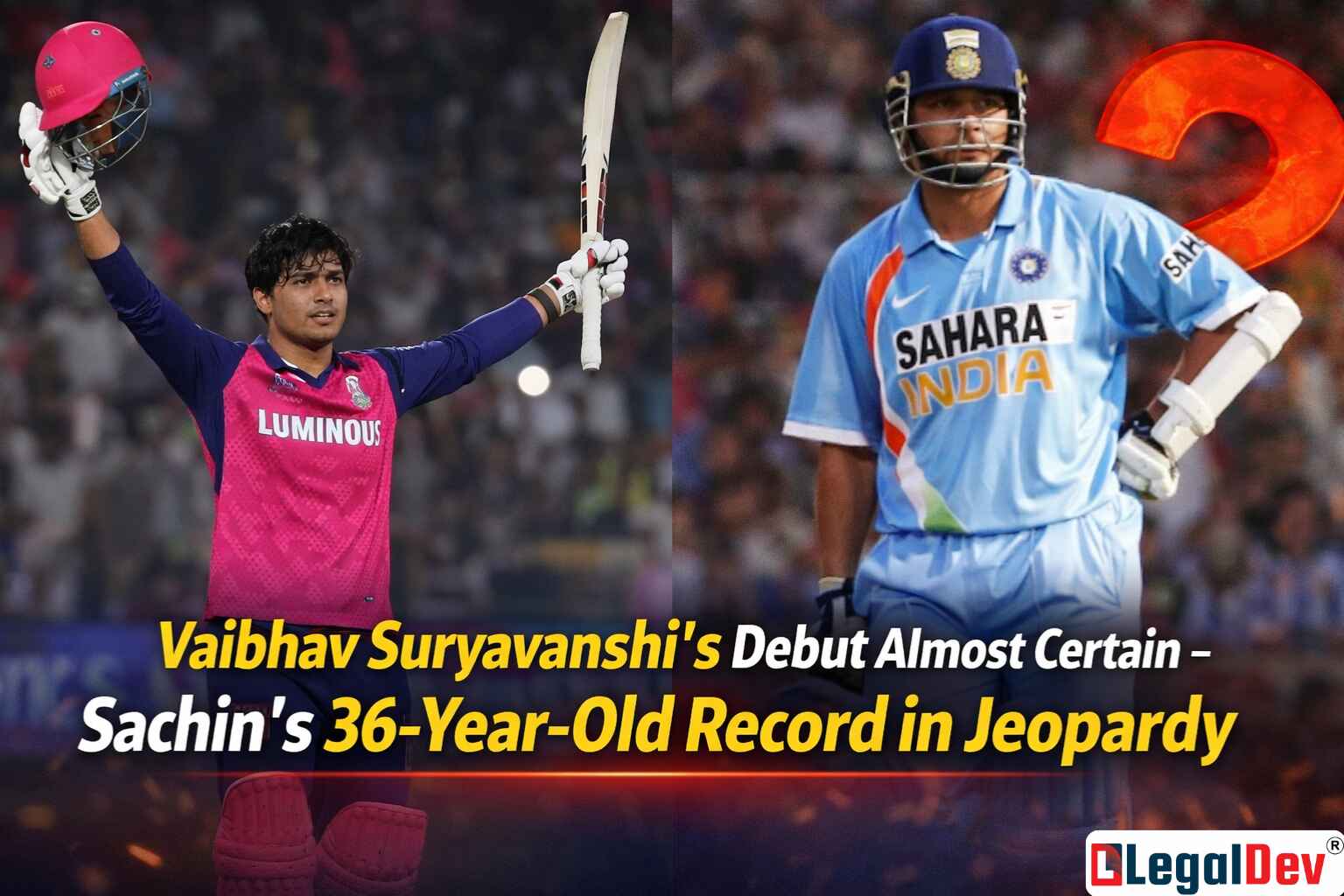
Vaibhav Suryavanshi's Debut Almost Certain — Sachin's 36-Year-Old Record in Jeopardy
At just 15 years old, Vaibhav Suryavanshi is knocking on the very door that took Sachin Tendulkar 16 years to reach. Reports suggest that for the Ireland tour scheduled for June, selectors have proposed his name—and the possibility of his entry into the T20 squad looks stronger than ever.
Team India Debut for Vaibhav Suryavanshi — Opportunity Awaits on Ireland Tour
According to a report by The Indian Express, the selection committee has shortlisted Vaibhav. This tour will commence immediately after IPL 2026, and the team management is reportedly in the mood to field a second-string squad. The message is clear—this is the perfect time to give youngsters international exposure. While an official announcement is pending, sources claim Vaibhav remains a frontrunner. There are also discussions about giving him an opportunity on the Zimbabwe tour following Ireland. Selectors don't want to rush, but they also feel it isn't right to keep such talent on the bench for too long.
The Records of Sachin and Shafali — Which This 15-Year-Old Boy Is Set to Break
This is a massive milestone. Sachin Tendulkar played his first Test against Pakistan at the age of 16 years and 205 days—a record that has stood in Indian cricket history for the last 36 years. In women’s cricket, Shafali Verma claimed the overall record by debuting at 15 years and 7 months.
Vaibhav is younger than both. If he gets the chance against Ireland, he will simultaneously claim two records—the youngest Indian male player and the youngest Indian cricketer to debut overall.
Vaibhav Suryavanshi’s Performance in IPL 2026 — Forcing Selectors to Think
-
5 Matches, 5 Innings, 200 Runs.
-
Average: 40 | Strike Rate: Over 263.
These statistics would be brilliant for any experienced batsman; for a 15-year-old boy, they are nearly unbelievable. His best performances in IPL 2026 include 78 runs off 26 balls against RCB, 52 off 17 balls against CSK, and 39 off 14 balls against MI. Although he was out for a golden duck in Monday’s match, one bad innings does not define his potential.
The most important factor? He achieved this against the world’s best bowlers. Hitting a six off Jasprit Bumrah’s very first ball and standing fearless against Josh Hazlewood isn't just about stroke-play—it's about mental toughness.
Expert Opinions — "Don't Wait Any Longer"
IPL Chairman Arun Dhumal stated that such talent at such a young age is rare, and Vaibhav fully deserves a debut for Team India. Former all-rounder Irfan Pathan went a step further, directly appealing to selectors to give him the opportunity now. When two distinct legends are saying the same thing, it becomes difficult for selectors to ignore.
Upcoming Schedule — When and Where Will the First Chance Arise?
India and Ireland will play two T20 matches on June 26 and June 28. After this tour ends, Team India will head to England, where senior players will return. Ireland is a relatively weaker side with less pressure, which is why selectors consider this the ideal stage for Vaibhav’s debut. If everything goes according to plan, Vaibhav Suryavanshi could write a new chapter in Indian cricket history in the final week of June.
Frequently Asked Questions (FAQ)
When will Vaibhav Suryavanshi debut for Team India?
While there has been no official announcement yet, his name is at the top of the list for the Ireland tour in June. Both T20 matches are scheduled for June 26 and 28. If selected, this will be his first international match.
Who is the youngest cricketer to debut for India?
In men's cricket, Sachin Tendulkar debuted at 16 years and 205 days—a record held for 36 years. The overall record belongs to Shafali Verma, who played at 15 years and 7 months. Vaibhav is younger than both, so both records could break at once.
What is Vaibhav Suryavanshi's strike rate in IPL 2026?
He has scored 200 runs in 5 innings at an average of 40 and a strike rate of over 263. His knocks against RCB (78 off 26) and CSK (52 off 17) place him at the top of the list of best young batsmen in IPL 2026.
Can Vaibhav Suryavanshi hit Bumrah?
Yes—and he has already done it. By hitting a six off Bumrah’s first ball in the match against MI, Vaibhav proved he isn't intimidated by big names. It was the moment that caught the attention of the entire cricketing world.
Is Suryavanshi's debut confirmed?
It is not "confirmed" yet, but the possibility is very strong. Selectors have shortlisted his name, and legendary players have spoken in his favor. The final decision will come after the IPL ends—until then, we must wait.