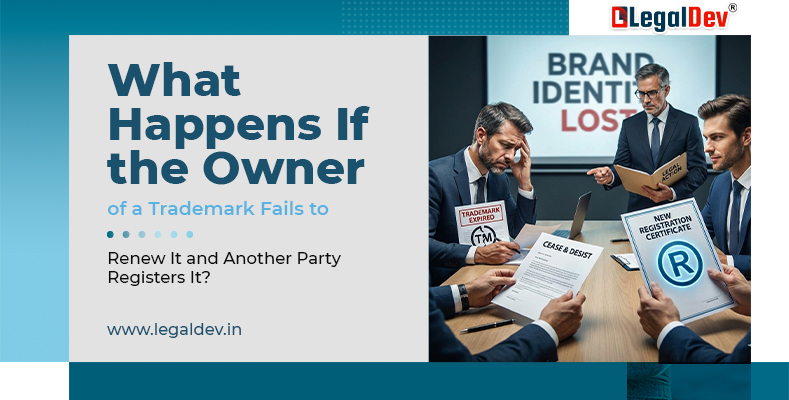
Trademarks go beyond a logo or brand name; they represent goodwill, consumer trust, market identity, and legal ownership of a company’s commercial brand. In addition, many companies do not realize that it is important to renew their registered trademarks in a timely manner; they view registration as a one-time activity. If a trademark is not renewed, the brand may be at risk for damages (legal, financial, and reputational) as a result of another party registering the same or similar trademark. In this article, I will outline in detail what will happen to a trademark if the owner does not renew it, and another party registers it afterward. I plan to write this article from a professional/practical standpoint and will be useful to business owners, start-up companies and brand managers in understanding the ramifications of, the remedies available for, and how to properly follow the processes necessary to renew a trademark, especially if they choose to use a dependable Trademark Renewal Service in India.
Understanding Trademark Renewal and Its Legal Importance
Trademark registrations have an expiration date. In India, the first term for a trademark registered in India is for a period of 10 (ten) years starting from the date that you file the application. If you are going to keep your exclusive rights to the trademark, you must file a Trademark Renewal application before the expiration of each 10-year term. The renewal of a trademark registration is not merely a formality; it serves several important purposes including:
• To ensure that you continue to hold exclusive rights to your trademark
• To prevent anyone else from legally using, or claiming ownership of, your trademark
• To ensure that you can continue to enforce your trademark from being infringed
• To maintain the market value and legal status of your trademark
If you do not file a trademark renewal application, then you run the risk of having the trademark removed from the Trademark Register and therefore becoming available for misuse or re-registration by someone else.
What Happens When a Trademark Is Not Renewed?
If the trademark owner does not file for Trademark Renewal during the designated timeframe, the following progression will occur:
1.Trademark Becomes Subject to Removal
The Registrar of Trademarks may alert the trademark owner of their imminent removal if they fail to renew their trademark before its expiry date. Should the owner fail to take action within the applicable grace period, the trademark will be deemed expired.
2. Removal of Trademark
Once the trademark is removed from the register, this means that it no longer has statutory protection under the Trade Marks Act 1999. The trademark will not be able to receive any future statutory protection; therefore, the owner has lost all exclusive legal rights associated with the mark.
3. Loss of Enforcement Rights
In addition, the owner of an expired trademark is unable to enforce his/her trademark rights against any infringers; thus, the owner is unable to prevent another party from using a mark identical to the original trademark or one that is confusingly similar to the original trademark.
4. Exposure to Third-Party Claims
Probably the most detrimental consequence of allowing your trademark to expire is that the mark is now available for use and registration by another party.
Can Another Party Register an Expired Trademark?
Yes. When a trademark is removed from the register due to non-renewal it will be available for registration by other parties as long as those other parties meet the legal requirements for creating a new trademark that is distinct and available from other existing trademarks.
A new applicant has many choices, such as:
• File a new trademark application, or
• Claim to have bona fide use and/or intended use of the trademark.
• Obtain registration if there are no successful objections or oppositions against the registration.
If any of the options above occur, the person that was originally the owner of the trademark may find that they can no longer legally use their brand.
Legal Implications When Another Party Registers Your Trademark
The legal situation surrounding the registration of a trademark by a third-party registrant who is not the owner and fails to renew the trademark creates several challenges for the victims of this situation.
1.Loss of Exclusive Ownership.
The new trademark registrant will automatically have exclusive statutory rights to the trademark as established by law. The new owners will have the sole authority to use, license, assign, and enforce the trademark.
2. Original Owner May Be Subject to Infringement Claims.
Ironically, the original owner of the trademark may be subject to trademark infringement claims if they continue to use the trademark after the registration of the new owners and without authority from the new owners.
3. Original Owners May Be Required to Completely Rebrand Their Business.
In most cases, the original owners may have to completely rebrand their businesses, which includes, but is not limited to, changing all of their logos, packaging, marketing materials, domain names, and advertising assets.
4. Financial and Reputational Damage.
Rebranding a business is a costly and disruptive process for most companies. More importantly, when a company rebrands, itself it is likely to dilute the brand equity that it has developed over many years and create confusion among loyal customers
Does Prior Use Offer Any Protection?
Indian trademark law does recognize prior use. However, relying solely on prior use after failing to renew a trademark is risky and uncertain.
The original owner may attempt to:
-
File an opposition against the new registration
-
Seek rectification or cancellation of the new trademark
-
Prove continuous and extensive prior use
These legal remedies are time-consuming, costly, and not guaranteed to succeed. Courts also consider whether the original owner acted negligently by not renewing the trademark.
What If Another Party Registers the Expired Trademark?
Once a third party successfully completes registration of the Trademark once the original owner does not renew, the nature of the law surrounding the Trademark will radically alter.
1.Legal Ownership Transfers to New Registrant
The new applicant now holds Legal Ownership as the Registered Proprietor of the Trademark; therefore, they possess:
• Exclusive Rights to the Trademark
• The Ability to Prevent Others from Utilizing the Trademark
• Course of Action to prosecute those that Infringe the Trademark
Surprisingly, this has the potential to include an action against the original owner of the Trademark.
2. Original Owner Receives Legal Notices from the New Owner
If the original owner continues to utilize the Trademark and the new owner has registered the Trademark, the new owner may send:
• Cease-and-Desist Notices
• Civil Action to Recover Damages due to infringement of the Trademark
• Demand for Royalties related to the Trademark
If this occurs, the original owner may attempt to present Prior Usage as a Defense; however, it does not guarantee victory, especially if the original owner failed to exercise Due Diligence regarding the Renewal of the Trademark.
3. Legal Disputes May Be Time-consuming and Costly
The original owner may attempt to seek Redress through legal avenues by submitting:
• Rectification Petitions
• Cancellation Applications, or
• Opposition Proceedings (if filed within the time period).
The Legal Avenues for redress may be costly, time-consuming and unpredictable. The Courts and Tribunals will generally examine if the original owner took Due Diligence in Protecting the Trademark.
Can the Original Owner Reclaim the Trademark?
Yes, but the process is complex, time-consuming, and uncertain.
Possible Legal Remedies:
1. Filing a Rectification Petition
The original owner may file a rectification or cancellation petition before:
-
Intellectual Property Appellate Board (now jurisdiction with High Courts)
-
Trademark Registry
Grounds may include:
-
Prior use
-
Bad faith registration
-
Likelihood of confusion
-
Deceptive similarity
2. Opposing the New Trademark (If Still Under Publication)
If the new trademark is published but not yet registered, the original owner can file an opposition within 4 months.
3. Passing-Off Action
A civil suit for passing off can be initiated to protect unregistered trademark rights, but it requires substantial proof.
Risks of Continuing to Use the Trademark After Loss of Registration
If after the trademark has been registered by another party the original owner continues using it there are a number of risks that may arise including:
• Legal action for trademark infringements
• Injunctive relief ordered by a court stopping the continued use of the trademark• Significant damages or settlement amounts being awarded
• The need to completely rebrand the company
• A major decrease in consumer confidence
These points illustrate the reason why a company should not view Trademark Renewal Service in India as something that is optional, but rather a business requirement.
Trademark Renewal Process in India (Step-by-Step)
The following steps outline the trademark renewal process and will ensure compliance with regulations.
Step 1: Trademark Due Date Tracking
Maintain a renewal calendar or use a professional service.
Step 2: Filing Form TM-R
The renewal application is filed using Form TM-R.
Step 3: Payment of Government Fees
Standard or late fee depending on filing timeline.
Step 4: Registry Examination
The Trademark Registry reviews the application.
Step 5: Renewal Confirmation
Trademark validity is extended for another 10 years.
Financial and Brand Impact of Trademark Loss
The issues resulting from Trademark Cancellation have effects beyond just the legal liability aspect.
1.Brand Dilution
Years worth of work on a brand can disappear quickly.
2. Loss of Market Position
Rival companies can use consumer uncertainty to their advantage.
3. Expensive Rebranding
Every rebranding requires:
• Designing a New Logo
• Creating New Marketing Campaigns
• Changing Websites and/or Domain Names
• Redesigning Packaging and Labels
• Communicating with Customers
4. Concerns to Investors and Business Partners
Trademark instability can create concerns for:
• Investors
• Franchise Partners
• Distributors
Can a Lapsed Trademark Be Restored?
In India, restoration of a cancelled trademark is possible under certain conditions:
Restoration Timeline
A trademark must be restored within one year from the cancellation date. To restore the trademark, the trademark owner should submit a restoration application and pay any applicable fees.
Registrar's Discretion
Restoration of a cancelled trademark is not guaranteed. All applications for restoration will be evaluated by the Registrar based on factors such as:
• The cause of the trademark cancellation
• The honesty/legitimacy of the trademark owner's intent
• The public interest and potential for confusion
If, during the time between cancellation and restoration, another entity has filed an application for registration of the same trademark or has become the owner of that trademark, the trademark owner will have a much more difficult time restoring the cancelled trademark.
Importance of Trademark Renewal
Trademark Renewals are not simply a compliance obligation but rather one of the most important components of protecting your brand from competitors.
1.Maintains the identity of your brand.
A trademark is how the public identifies your business, and by renewing it, you establish that your brand names, logos, and slogans continue to belong only to you.
2. Maintains your legal rights.
An active and valid trademark registration gives you the statutory rights afforded to you by trademark law. By renewing your trademark registration, you ensure you will have uninterrupted protection.
3. Protects your business's reputation.
If a competitor or another entity registers your trademark after it has expired, it could create confusion among your customers and negatively impact your brand image.
4. Assists in expanding your business.
Generally, having an active trademark is advisable when: (a) franchising; (b) licensing; (c) investor due diligence; or (d) merging with another company.
Benefits of Timely Trademark Renewal
There are many advantages to pursuing timely Renewal of your Trademark or utilizing an expert Trademark Renewal Service:
1. Continuous Legal Protection: Renewal prevents any lapse in the protection of your mark by providing uninterrupted protection against potential infringers.
2. Stress-Free Renewal: By defining a procedure for Trademark Renewal, companies can devote more time to growing their business and reducing risks associated with trademark infringement.
3. Reduced Cost: Renewing your Trademark on time incurs much less cost than litigating trademark disputes or the expense associated with a complete rebranding effort.
4. Enhanced Enforcement Rights: Having an active Trademark makes taking legal action against infringers much easier than if you did not have a Trademark or if it were lapsed.
5. Increased Value of Your Business: Businesses can renew Trademarks indefinitely as long as they comply with the requirements of Federal Trademark Law, thus creating a business asset that continues to appreciate in value over time.
Common Mistakes to Avoid in Trademark Renewal
The renewal of trademarks is very important for businesses; however, many do not take the necessary steps during renewal. Some common mistakes businesses make include:
1)Missing the Renewal Deadline
Most businesses' renewal cycles are 10 years long, and many times businesses forget or do not keep track of multiple Trademark renewals.
2) Assuming Automatic Renewal of the Trademark
There is no such thing as an automatic renewal of your Trademarks. Businesses are required to file for renewal and pay the required fees proactively.
3) Ignoring Notices from Trademark Registry
Businesses are sent reminders and notices by the Trademark Registry and frequently disregard or misinterpret them.
4) Incorrect Filing of the Renewal Forms
Errors in the renewal forms or classification of your trademarks could cause your application for renewal to be rejected or delayed.
5) Not Hiring a Professional Trademark Renewal Service
Filing your trademark renewal without sufficient legal knowledge will result in filing errors. A reliable Trademark Renewal Service India can help you comply with all legal requirements.
Consequences of Failing to Renew a Trademark
The consequences of non-renewal can be severe and long-lasting.
1. Loss of Brand Ownership
The most damaging consequence is losing ownership of a brand you invested years in building.
2. Forced Rebranding
If another party registers your expired trademark, you may be forced to rebrand—changing names, logos, packaging, and marketing materials.
3. Financial Losses
Rebranding, legal disputes, and loss of customer trust can lead to significant financial setbacks.
4. Loss of Market Position
Competitors may take advantage of your weakened legal position to capture market share.
5. Damage to Customer Trust
Brand confusion can erode consumer confidence and loyalty.
Common Reasons Businesses Fail to Renew Trademarks
Awareness of why trademarks lapse allows for management of future threats to valid trademark ownership through the following means:
-
Unawareness of Trademark Renewal Period
-
Change of Trademark Management and/or Ownership
-
Lack of sufficient legal compliance regimes
-
Believing that if a Trademark is not used, they will never be renewed
-
Decisions made based solely on the financial aspects without any legal considerations
Each of these causes can create an irreversible effect on protecting the Brand.
Conclusion
The failure to renew a trademark can be detrimental to a company by undoing their years of investment in the development of the brand and exposing the company to potential litigation and/or financial loss, as well as necessitating the creation of the rebranded product. Renewing the Trademark is therefore more than just a legal requirement and should be considered a strategic necessity for preserving the brand's worth, maintaining an exclusive right to use the Trademark, and providing security for continued success in the business world. Businesses can protect their intellectual property by becoming familiar with the process of renewing a Trademark in India, avoiding the pitfalls associated with the renewal process, and utilizing a reputable Trademark Renewal service in India.
(FAQs)
1. What happens if I miss the trademark renewal deadline?
If you miss the renewal deadline, your trademark may be removed from the register. However, you may still apply for restoration within one year of expiry, subject to the Registrar’s approval.
2. Can I stop someone from registering my expired trademark?
Once your trademark is removed, preventing third-party registration becomes difficult. You may oppose or challenge the application, but success depends on evidence of prior use and legal merit.
3. Can I continue using my trademark after it expires?
You may continue using it, but without registration, you lose statutory protection. Continued use may also expose you to infringement claims if another party registers the mark.
4. Is trademark restoration guaranteed?
No. Restoration is discretionary and depends on the Registrar’s satisfaction and whether third-party rights have intervened.
5. Why should I opt for a Trademark Renewal Service in India?
A professional service ensures timely renewal, legal compliance, and continuous protection of your brand, minimizing the risk of disputes and loss of rights.